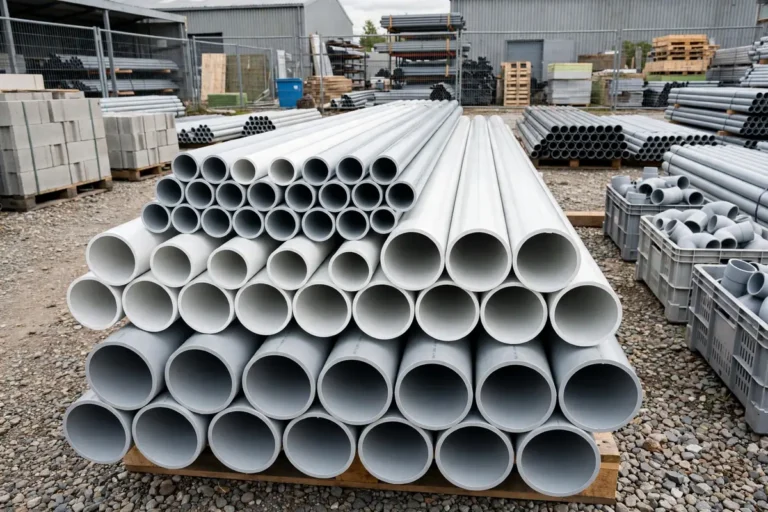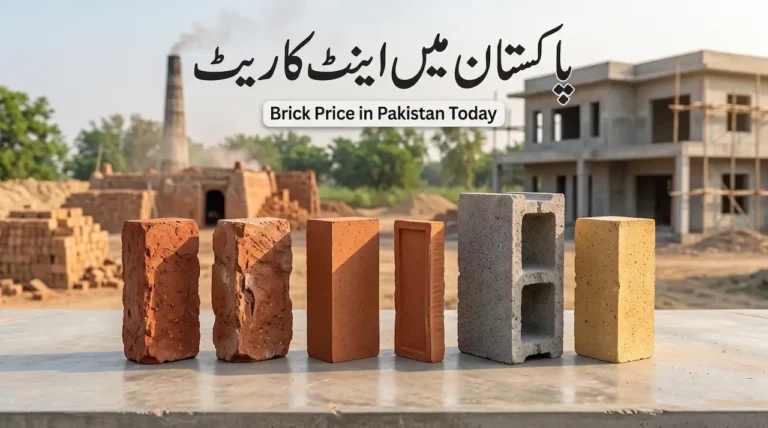

Steel Rate Today in Pakistan (سریا کا ریٹ) – Saria Price Per KG & Ton
The current steel rate in pakistan and prevailing saria rate in pakistan for standard ASTM A615 Grade 60 deformed steel ranges between Rs. 252 and Rs. 263 per kg from certified primary mills. When checking the steel price in pakistan today, the official 1 ton saria price in pakistan today benchmarks at Rs. 252,000 to Rs. 263,000 per metric ton (1,000 kg), while commercial unbranded saria price in pakistan trades between Rs. 202 and Rs. 222 per kg. There is no single national steel price in Pakistan — rates are retail indicators that vary by city, mill and dealer.
- The steel rate in Pakistan today for Grade 60 saria is Rs. 252–263 per kg from branded mills (Mughal Rs. 252–262, Amreli Rs. 253–268), while unbranded saria is Rs. 202–222 per kg.
- Saria price per kg varies by city and mill — always confirm the per-kg rate with your local dealer before buying, as rates are retail indicators, not one fixed national price.
- Grade 60 is the standard choice for slabs (lenter), columns and beams; Grade 40 costs slightly less and suits boundary walls and light work.
- 📏 Saria Rate Today by Size (3 Sutar to 8 Sutar Price List)
- 🏭 Brand-Wise Steel Rate in Pakistan (Grade 60 Rebars)
- 🏙️ City-Wise Saria Rate Today in Pakistan (Per KG)
- Which Steel Grade is Best for House Construction in Pakistan?
- How Much Steel (Saria) is Needed for a 5 Marla & 10 Marla House?
- 8-Step Practical Saria Buying & Quality Inspection Checklist
- Key Economic Drivers Influencing Steel Prices in Pakistan
- Frequently Asked Questions (اکثر پوچھے جانے والے سوالات)
For residential and commercial building construction across Pakistan, structural engineers recommend using prime ASTM A615 Grade 60 deformed steel rebars for roof slabs (chhat / lenter), columns, and foundation footings. Always ensure bars are free from deep rust pitting and verify the manufacturer logo and nominal diameter gauge before taking delivery at your construction site.
📏 Saria Rate Today by Size (3 Sutar to 8 Sutar Price List)
Standard imperial Sutar measurements (1 Sutar = 1/8 inch) and metric millimeter equivalents to evaluate the prevailing saria price in pakistan today across Grade 60 market benchmarks:
| Rebar Size & Application (سائز) | Per KG & 40 KG (من) | Per Ton (ٹن) |
|---|---|---|
| 3 Sutar (10 mm) 3/8″ • Roof Slabs (Lenter) & Stirrups | Rs. 255 – 258 40kg: Rs. 10,200 | Rs. 255,000 |
| 4 Sutar (12 mm) 1/2″ • Beams, Columns & Slabs | Rs. 258 – 261 40kg: Rs. 10,320 | Rs. 258,000 |
| 5 Sutar (16 mm) 5/8″ • Heavy Pillars & Foundations | Rs. 259 – 264 40kg: Rs. 10,360 | Rs. 259,000 |
| 6 Sutar (20 mm) 3/4″ • Basements & Plinth Beams | Rs. 260 – 267 40kg: Rs. 10,400 | Rs. 260,000 |
| 7 Sutar (22 mm) 7/8″ • Commercial Plazas & Bridges | Rs. 262 – 272 40kg: Rs. 10,480 | Rs. 262,000 |
| 8 Sutar (25 mm) 1 Inch • Heavy Industrial Footings | Rs. 265 – 279 40kg: Rs. 10,600 | Rs. 265,000 |
🏭 Brand-Wise Steel Rate in Pakistan (Grade 60 Rebars)
Comparative price benchmarks across premier primary billet re-rolling mills in Pakistan, with the official mughal steel price per ton today in pakistan benchmarked at Rs. 252,000 to Rs. 262,000 (Rs. 252 – 262 per kg):
| Manufacturer / Brand (برانڈ) | Per KG & 40 KG (من) | Per Ton (ٹن) |
|---|---|---|
| Mughal Steel Grade 60 (ASTM A615) | Rs. 252 – 262 40kg: Rs. 10,080 | Rs. 252,000 |
| Mughal Supreme Grade 72 (Premium) | Rs. 256 – 283 40kg: Rs. 10,240 | Rs. 256,000 |
| Amreli Steels Grade 60 Extreme Bar | Rs. 253 – 268 40kg: Rs. 10,120 | Rs. 253,000 |
| Ittefaq / Ittehad Steel Grade 60 Certified | Rs. 249 – 264 40kg: Rs. 9,960 | Rs. 249,000 |
| Kamran Steel Grade 60 Deformed | Rs. 249 – 283 40kg: Rs. 9,960 | Rs. 249,000 |
| FF Steel Frontier Foundry (G-60) | Rs. 254 – 264 40kg: Rs. 10,160 | Rs. 254,000 |
| Agha Steel EAF Green Rebars | Rs. 254 – 269 40kg: Rs. 10,160 | Rs. 254,000 |
| Sheikhoo Steel Grade 60 Prime | Rs. 249 – 283 40kg: Rs. 9,960 | Rs. 249,000 |
| Local Re-Rolled Steel Commercial Ship Scrap | Rs. 202 – 222 40kg: Rs. 8,080 | Rs. 202,000 |
🏙️ City-Wise Saria Rate Today in Pakistan (Per KG)
City wholesale rates with local mandi distribution hubs across Pakistan. In the federal capital and Rawalpindi, the prevailing islamabad saria rate today averages Rs. 254 – 264 per kg (Rs. 10,160 – 10,560 per 40 kg):
| City & Wholesale Mandi Hub (شہر اور مارکیٹ) | Grade 60 Rate (Per KG & 40 KG) |
|---|---|
|
Lahore (لاہور) Badami Bagh & Misri Shah Iron Market |
Rs. 252 – 262 /kg 40kg: Rs. 10,080 |
|
Karachi (کراچی) Shershah & S.I.T.E. Industrial Area |
Rs. 250 – 260 /kg 40kg: Rs. 10,000 |
|
Islamabad / Rawalpindi I-9 Industrial Area & City Saddar Road |
Rs. 254 – 264 /kg 40kg: Rs. 10,160 |
|
Faisalabad (فیصل آباد) Samundri Road Iron Market |
Rs. 252 – 260 /kg 40kg: Rs. 10,080 |
|
Multan (ملتان) Vehari Road & Shershah Bypass |
Rs. 253 – 262 /kg 40kg: Rs. 10,120 |
|
Gujranwala / Sialkot G.T. Road Steel Re-rolling Corridor |
Rs. 252 – 263 /kg 40kg: Rs. 10,080 |
|
Peshawar (پشاور) Ring Road & Hayatabad Industrial Estate |
Rs. 255 – 266 /kg 40kg: Rs. 10,200 |
|
Quetta (کوئٹہ) Sariab Road (Freight differential included) |
Rs. 262 – 274 /kg 40kg: Rs. 10,480 |
Interactive Steel Saria & Roof Lenter Calculator
Calculate your Roof Slab / Grey Structure Steel Requirement or check 40-Foot Standard Bar Weight by Sutar:
Which Steel Grade is Best for House Construction in Pakistan?
When designing the structural framework of a residential house or commercial building, selecting the correct steel grade directly governs earthquake resistance, tensile load capacity, and long-term durability. In Pakistan, three primary categories of deformed steel rebars dominate the marketplace:
- Grade 60 Steel (ASTM A615 / G-60): The undisputed benchmark for contemporary residential engineering. Grade 60 possesses a minimum yield strength of 60,000 PSI (pounds per square inch). Building codes across seismic regions in Pakistan (such as Seismic Zones 2B, 3, and 4 in Islamabad, Quetta, Karachi, and Northern areas) strictly require Grade 60 rebar for foundations, shear walls, columns, and reinforced roof slabs. It flexes under dynamic lateral shockwaves without snapping, providing vital structural ductility.
- Grade 40 Steel (ASTM A615 / G-40): Engineered with a yield strength of 40,000 PSI. While historically popular for single-storey low-load structures, Grade 40 requires significantly heavier steel bar volume to match the tensile load capacity of Grade 60. Modern civil engineers predominantly restrict Grade 40 to boundary walls, ground floor water tank slabs, and non-load-bearing retaining curbs.
- Grade 72 / Supreme High-Tensile Rebars: Specialized alloys manufactured by premier mills like Mughal Supreme. Designed with 72,000 PSI yield strength, these bars are primarily specified in high-rise commercial plazas and heavy industrial cantilevered spans to reduce overall steel congestion in concrete joints.
- Commercial Re-Rolled Steel: Manufactured from recycled ship-breaking scrap plates (frequently sourced from Gadani). While cheaper by Rs. 35 to Rs. 50 per kg, re-rolled bars have erratic carbon content, micro-cracks, and lack uniform elongation. During seismic stress or ground settlement, uncertified re-rolled saria can fail catastrophically. Always verify current cement rates in Pakistan alongside structural steel to ensure your 1:2:4 concrete mix achieves full bond strength with prime ribbed rebar.
How Much Steel (Saria) is Needed for a 5 Marla & 10 Marla House?
Estimating structural steel requirements depends on the architectural design, soil bearing capacity, column distribution, and whether the building is single-storey or double-storey. Across standard residential construction practices in Pakistan, civil structural engineers rely on the following thumb rules per square foot of total covered area:
Here is the realistic steel weight and procurement breakdown for common residential plot sizes in Pakistan:
- 5 Marla Double-Storey House (~1,900 to 2,000 sq. ft. covered area): Requires approximately 7.5 to 9.5 Metric Tons (7,500 – 9,500 kg) of Grade 60 steel. Sizing distribution typically consumes 50% 3-Sutar rebar (slabs and rings), 30% 4-Sutar rebar (beam mains and slab distributing bars), and 20% 5-Sutar or 6-Sutar rebar (footing mesh and column verticals). If you are building with traditional masonry load-bearing walls, you will also need to track brick prices in Pakistan to balance overall masonry structural deadweight.
- 10 Marla Double-Storey House (~3,200 to 3,500 sq. ft. covered area): Demands approximately 14 to 17 Metric Tons (14,000 – 17,000 kg) of prime steel. Because span distances between columns are wider in 10 Marla floor plans, heavier 5-Sutar and 6-Sutar bars are incorporated in concealed and inverted drop beams to eliminate roof sagging. For semi-urban or outbuilding sections where RCC slab casting is not feasible, many builders evaluate TR Garder steel rates as a functional, cost-saving roof alternative.
- 1 Kanal Double-Storey House (~5,500 to 6,200 sq. ft. covered area): Requires between 25 to 30 Metric Tons (25,000 – 30,000 kg) of steel. When budgeting foundation and basement excavation for large villas, factoring in continuous supplies of structural sand (Rait) and Margalla or Sargodha crush (Bajri) ensures your concrete batches achieve the required 3000 PSI compressive cylinder strength.
8-Step Practical Saria Buying & Quality Inspection Checklist
Purchasing construction steel is one of the single largest cash outlays in house building. Unfortunately, dishonest steel dealers and local yard operators routinely exploit homeowners through under-gauge supply and weighbridge discrepancies. Follow this engineer-approved 8-step verification protocol before accepting any delivery:
- Inspect Mill Embossing on Every Bar: Prime steel rebars from reputable mills have permanent raised lettering rolled into the steel at regular 1-meter intervals. Verify the brand name (e.g., MUGHAL, AMRELI, ITTEFAQ), the nominal bar size code (e.g., #3, #4, #5), and the grade designation (G-60). Never purchase plain or sheared rebar that lacks clear mill identification.
- Measure Bar Gauge with a Digital Vernier Caliper: A common fraud in local markets is selling “under-gauge” steel. For instance, supplying 2.75 Sutar rebar while charging for 3 Sutar (10mm). Because steel is priced by weight, under-gauge bars contain less actual metal cross-section, reducing the load safety margin of your concrete ceiling. Measure random sample pieces from multiple bundles.
- Supervise Digital Weighbridge (Kanta) Measurement Personally: Always insist on weighing the delivery truck on a trusted computerized public weighbridge twice: first when fully loaded with steel (Gross Weight), and immediately after offloading the steel at your plot (Tare Weight). The difference is your actual Net Weight. Never rely solely on dealer hand-written delivery chits.
- Perform an On-Site Cold Bend Test: Take a standard 40-foot length of 4-Sutar or 5-Sutar steel and bend it cold to 180 degrees using a bar bending key. Prime billet Grade 60 steel will bend smoothly without developing transverse cracks or splitting on the outer surface. If the steel fractures, snaps, or exhibits hairline surface cracks, it has been re-rolled from brittle scrap metal—reject the entire batch immediately.
- Differentiate Atmospheric Surface Rust from Flaking Corrosion: Steel rebars stored in open yard storage frequently develop a light golden or reddish oxide patina. This light surface rust does not degrade tensile strength and actually improves mechanical friction between the rebar ribs and concrete paste. However, if rust is flaking off in sheets or leaves deep pitting depressions that erode the rib pattern, the steel is compromised.
- Maintain Single-Brand Sourcing for Slabs and Beams: Avoid mixing different steel brands in the same structural floor slab. Different re-rolling mills utilize differing carbon-manganese chemical compositions and cooling technologies (Thermo-Mechanically Treated vs. cold-twisted). Inconsistent thermal expansion coefficients across mixed bars can induce micro-cracks in floor plaster and under floor tile installations over seasonal temperature shifts.
- Procure Full Uncut 40-Foot Commercial Bundles: Standard manufactured rebar length in Pakistan is 40 feet (approx. 12.19 meters). Ordering full uncut bundles minimizes joint overlapping (lap splicing) in beams and slabs. Each overlap wastes 40 to 50 times the bar diameter in steel length, unnecessarily driving up your total tonnage costs.
- Obtain a Written Mill Test Certificate (MTC): When purchasing directly from authorized tier-1 distributors in lots of 5 tons or more, request the official Mill Test Certificate corresponding to the heat number tagged on the bundle wire. This document guarantees yield point, tensile strength, and chemical elongation percentages.
Key Economic Drivers Influencing Steel Prices in Pakistan
Steel rebar prices in Pakistan fluctuate on a weekly and daily basis. Understanding the primary macroeconomic forces behind price shifts enables builders and contractors to time their bulk purchases effectively:
- International Ferrous Scrap & Billet Import Costs: Pakistan relies heavily on imported raw metal scrap and steel billets shipped through Karachi Port and Port Qasim. Global price benchmarks on the London Metal Exchange (LME) and domestic ship demolition trends at Gadani directly dictate raw material costs. You can monitor domestic metal scrap movements on our daily scrap rate in Pakistan tracker.
- Industrial Electricity & Fuel Tariffs: Re-rolling and Billet manufacturing operate in power-intensive Electric Arc Furnaces (EAF) and induction furnaces. Electricity tariff hikes, fuel price adjustments (FPA), and petroleum transport costs add direct overhead to per-ton production expenses.
- Exchange Rate Fluctuations (PKR vs USD): Because over 70% of raw melting scrap is imported, any depreciation in the Pakistani Rupee rapidly inflates the landed cost of letters of credit (LCs), which mills pass on to domestic distributors within 24 to 48 hours.
- Seasonal Construction Cycles: Demand peaks during the dry autumn and spring construction windows (October through April). During peak monsoon months (July to August), nationwide concreting slows down, often causing retail stockists to offer competitive spot discounts to clear yard inventory.
Frequently Asked Questions (اکثر پوچھے جانے والے سوالات)
What is the current rate of Grade 60 steel (saria) per kg in Pakistan?
Branded prime Grade 60 deformed steel rebars (ASTM A615) from certified mills such as Mughal, Amreli, and Ittefaq currently retail between Rs. 252 and Rs. 263 per kg in major urban hubs including Lahore, Karachi, and Islamabad. Commercial unbranded re-rolled steel trades between Rs. 202 and Rs. 222 per kg.
What is the price and strength difference between 40 Grade and 60 Grade steel?
Grade 60 steel has a yield strength of 60,000 PSI, which is 50% stronger in tension than Grade 40 steel (40,000 PSI). While the retail price difference between the two is minimal (typically only Rs. 2 to Rs. 5 per kg), using Grade 60 allows you to use less total rebar volume while achieving far superior seismic resistance.
How many kilograms are in one metric ton and one maund (من)?
In Pakistan’s steel trade, 1 Metric Ton equals exactly 1,000 kilograms (kg). One traditional Maund (من) equals exactly 40 kilograms. Therefore, one metric ton contains exactly 25 maunds of steel.
Which steel brand is best for house construction in Pakistan?
Top certified manufacturers include Mughal Steel, Amreli Steels, Ittefaq Steel, Agha Steel, and FF Steel. All of these manufacturers produce primary-billet rebars conforming strictly to ASTM A615 and ISO standards, ensuring correct elongation, rib geometry, and earthquake safety.
How can I identify genuine Grade 60 steel and prevent dealer fraud?
Check for clear mill logo embossing and the “G-60” stamp every meter along each bar. Measure the bar diameter using a digital vernier caliper to confirm nominal dimensions, verify truck weight on a certified electronic weighbridge (kanta), and conduct a 180-degree cold bend test on-site to verify ductility.