Petrol Price in Pakistan Today (پٹرول کی قیمت)
⛽ Current Fuel Rates in Pakistan (Per Litre)
| Product Name | Price Per Litre (PKR) | Application |
|---|---|---|
| Super Petrol (Premier Euro 5) | Rs. 346.00 | Cars, Motorbikes, Light Vehicles |
| High-Speed Diesel (Hi-Cetane Euro 5) | Rs. 378.00 | Trucks, Buses, Commercial Transport |
| Kerosene Oil (SKO) | Rs. 308.52 | Domestic & Cooking |
| Light Diesel Oil (LDO) | Rs. 251.37 | Agricultural Machinery, Tube Wells |
🚛 Diesel Rate in Pakistan Today (High-Speed Diesel & Light Diesel)
Official PSO tariff rates for commercial transportation, agricultural tube wells, and industrial machinery:
| Diesel Category | Price Per Litre (PKR) | 10 Litres Cost (PKR) | 50 Litres / Commercial (PKR) |
|---|---|---|---|
| High-Speed Diesel (HSD) | Rs. 378.00 | Rs. 3780.00 | Rs. 18900.00 |
| Light Diesel Oil (LDO) | Rs. 251.37 | Rs. 2513.70 | Rs. 12568.50 |
🏙️ City-Wise Fuel Prices Across Pakistan
| City | Petrol (PKR / Litre) | Diesel (PKR / Litre) |
|---|---|---|
| Karachi | Rs. 346.00 | Rs. 378.00 |
| Lahore | Rs. 346.00 | Rs. 378.00 |
| Islamabad / Rawalpindi | Rs. 346.00 | Rs. 378.00 |
| Faisalabad | Rs. 346.00 | Rs. 378.00 |
| Multan | Rs. 346.00 | Rs. 378.00 |
| Peshawar | Rs. 346.00 | Rs. 378.00 |
| Quetta | Rs. 346.00 | Rs. 378.00 |
In Pakistan, petrol and diesel retail rates are officially reviewed fortnightly by the Oil and Gas Regulatory Authority (OGRA) and the Ministry of Finance on the 1st and 16th of every month. The consumer pump price comprises four components: the baseline ex-refinery cost (import parity benchmark), inland freight equalization margin (IFEM), oil marketing company (OMC) and dealer margins, and the statutory Petroleum Development Levy (PDL). Fuel prices remain nationally uniform across major urban centers, with minor transportation differentials in remote northern regions.
⛽ 5 Pump-Side Tests: How to Detect Adulterated Petrol & Under-Dispensing (پٹرول پمپ پر ملاوٹ کی پہچان)
Fuel adulteration and calibrated nozzle under-dispensing (pemaish chori) cost motorists billions of rupees annually while damaging fuel pumps, fuel injectors, and catalytic converters. Common fraudulent practices include blending cheap white spirit, solvents, or kerosene oil into Super Petrol (92 RON), or rigging electronic nozzle flow-meters. Motorists should safeguard their vehicles using these five verified inspection methods:
🚛 Freight & Ripple Effects: How High-Speed Diesel Drives Food & Commodity Inflation
While Super Petrol directly affects private car owners, motorbikes, and urban commuters, High-Speed Diesel (HSD) is the foundational economic engine of Pakistan’s entire logistics and agrarian economy. Over 90% of all national cargo—including fresh fruits, grain, steel rebar, and cement bags—is transported via long-haul 10-wheeler, 18-wheeler, and 22-wheeler articulated trucks traversing the National Highway (N-5), Indus Highway (N-55), and Motorways (M-2, M-3, M-5).
When HSD prices increase by Rs. 10 per litre, long-distance freight charges from Karachi Port to wholesale markets in Lahore, Rawalpindi, and Peshawar adjust upward within 24 hours. This escalating logistics overhead feeds directly into retail prices across primary basic commodities:
- Construction Sector Freight: Heavy materials like cement and steel require substantial transport energy. A diesel hike elevates delivery costs for standard 50kg bags tracked on our live today cement rate in Pakistan, alongside per-ton dispatch prices on Grade 60 steel saria rates.
- Agricultural & Tubewell Pumping: In off-grid rural farming belts lacking subsidized electricity tube wells, farmers rely on diesel engines to irrigate cash crops. When pumping costs surge, farm-gate production expenditures increase, driving market variations in our daily wheat price in Pakistan and mandi wholesale figures for sugar 50kg bags.
- Poultry Broiler Supply Chains: Controlled-shed poultry farms operate continuous high-output diesel generators to maintain temperature regulation during load-shedding. Increased diesel costs directly shift live bird mandi rates updated daily on our broiler rate in Pakistan page.
🚗 Fuel Efficiency Optimization Guide: 8 Ways to Maximize Kilometers Per Litre
With elevated retail fuel prices, small driving adjustments yield substantial monthly financial savings. Automotive engineers recommend these practical practices to improve vehicle fuel economy:
Under-inflated tires by just 5 PSI increase rolling resistance, reducing fuel economy by up to 3.5%. Check tire pressures weekly when tires are cold.
Aggressive jack-rabbit acceleration and sudden hard braking waste up to 20% more fuel in urban city traffic compared to smooth throttle modulation.
Dusty Pakistani operating conditions clog air intake filters rapidly, causing rich fuel-air mixtures and unburned fuel waste. Inspect plugs every 10,000 km.
Idling burns approximately 0.6 to 1.0 litre of fuel per hour. Switch off the engine during railway crossings or stationary waits exceeding 60 seconds.
Select your bike or car model and enter your daily commute or motorway trip distance (e.g., Lahore to Islamabad 375 km) to calculate your exact fuel liters, per-kilometer running cost, and full tank refill budget:
🏙️ City-Wise Fuel Rates: Lahore, Karachi, Islamabad & Rawalpindi
While the Ministry of Finance notifies standard baseline retail rates, millions of motorists daily search for localized fuel rates across specific urban corridors. Under the Inland Freight Equalization Margin (IFEM) mechanism administered by OGRA, standard pump rates remain uniform across major cities, with local depot logistics coordinated by major Oil Marketing Companies (OMCs) including Pakistan State Oil (PSO), Shell Pakistan, Total Parco, and Attock Petroleum (APL).
Today Petrol Price in Lahore (Punjab Fuel Hub & PSO Rates)
The today petrol price in Lahore is strictly synchronized with the federal OGRA notification. Whether refueling at PSO pumps on Mall Road, Shell stations along Gulberg Main Boulevard, or Total Parco stations near the Lahore Ring Road and Thokar Niaz Baig, motorists pay the uniform price per litre for Super Unleaded (Premier Euro-5) and High-Speed Diesel. Fuel supply across Lahore and adjacent districts (Kasur, Sheikhupura) is serviced via primary pipeline terminals at Machike and local bulk oil godowns.
Today Petrol Price in Karachi (Port City & Keamari Refinery Rates)
For motorists searching for the today petrol price in Karachi, pump rates across Clifton, Shahrah-e-Faisal, Gulshan-e-Iqbal, and Korangi are identical to the national tariff. Karachi serves as Pakistan’s primary energy import gateway, hosting coastal discharge berths at Keamari and Port Qasim, alongside major domestic refineries including Pakistan Refinery Limited (PRL) and National Refinery Limited (NRL). As a result, diesel and petrol price in Pakistan today originate from Karachi’s coastal terminals before being transported upcountry via the White Oil Pipeline (WOP).
Petrol Price Near Rawalpindi & Islamabad (Twin Cities Fuel Benchmark)
If you are looking for the verified petrol price near Rawalpindi or across Islamabad’s Blue Area, Kashmir Highway, and Saddar Rawalpindi, fuel stations operated by Attock Petroleum Limited (APL, headquartered in Rawalpindi) and PSO dispense Euro-5 petrol and high-speed diesel at standard regulated rates. Tanker deliveries to the twin cities are fed directly through the Sihala oil depot and Morgah refinery installations.
⛽ 1 Litre Petrol Price in Pakistan Today: City-Wise Comparison Matrix
To provide instant clarity on 1 litre petrol price in Pakistan across all provinces, the table below summarizes retail pump rates for Super Petrol (Euro-5), High-Speed Diesel (HSD), and Light Diesel Oil (LDO) across major commercial hubs:
| City / Region | 1 Litre Petrol (Super Euro-5) | 1 Litre Diesel (HSD) | Supply Depot & OMC Network |
|---|---|---|---|
| Lahore | Rs. 382.02 | Rs. 389.80 | Machike Depot supply; PSO, Shell & Total Parco stations. |
| Karachi | Rs. 382.02 | Rs. 389.80 | Keamari & Port Qasim coastal import discharge point. |
| Islamabad / Rawalpindi | Rs. 382.02 | Rs. 389.80 | Sihala storage terminal & Morgah ARL refinery link. |
| Faisalabad & Multan | Rs. 382.02 | Rs. 389.80 | Mahmoodkot pipeline terminal & central Punjab transit. |
| Peshawar & Quetta | Rs. 382.02 | Rs. 389.80 | Tarujabba & Kolpur storage depots; mountain transit routes. |
🚛 Diesel Rate in Pakistan Today (Commercial Transport & Freight Impact)
The diesel rate in pakistan today is the fundamental economic engine of the country. Unlike motor gasoline (petrol) which primarily powers private passenger cars and motorcycles, High-Speed Diesel (HSD) fuels the national logistics chain: heavy Bedford and Hino cargo trucks, intercity passenger buses (Daewoo, Faisal Movers), agricultural tube-wells, and grain combine harvesters. Consequently, whenever the pakistan diesel rate today is revised, intercity goods transport charges immediately adjust, directly impacting wholesale rates of everyday agricultural staples including fertilizer bag prices and mandi grains.
🏢 PSO Petrol Price vs. Private OMCs: Is There Any Price Difference?
Many Pakistani drivers wonder whether the pso petrol price in pakistan today is cheaper than private oil companies such as Shell, Total Parco, Gas & Oil Pakistan (GO), or Attock Petroleum. Under Federal Ministry of Petroleum regulations:
- Regulated Products (Super Petrol & HSD): The government fixes the maximum consumer pump price. No OMC or retail franchise can charge above the notified rate. While prices remain identical across brands, differences exist in fuel additive packages (detergents that prevent engine intake valve carbon fouling) and digital calibration integrity at retail pump meters.
- Deregulated Premium Fuels (HOBC / High Octane 97): High Octane (RON 97) is completely deregulated. PSO Altron X, Shell V-Power, and Total Excellium set their own independent pricing based on international chemical formulation costs, usually commanding a premium of Rs. 40 to Rs. 70 per litre above standard petrol.
How OGRA Calculates Fortnightly Petrol & Diesel Prices in Pakistan
Every 15 days—on the night of the 15th and the last day of each calendar month—the Oil and Gas Regulatory Authority (OGRA) forwards a working summary to the Ministry of Finance and the Prime Minister’s Office. While vehicle owners see a single per-litre rate on the petrol pump dispenser, the final retail price of Super Petrol (MS 92 RON) and High-Speed Diesel (HSD) is built from six distinct cost layers:
- 📱 Benazir Income Support (BISP) Fuel Assistance: Special cash grants coordinated with fuel cards are designated for registered low-income families during high inflation cycles.
- 💵 Currency Exchange Parity: Petroleum represents Pakistan’s single largest import bill. Any depreciation of the Rupee against the Dollar on our Currency Rates in Pakistan index forces domestic pump prices upwards.
- 🏗️ Construction Material Transportation: Freight charges for heavy structural materials—such as roofing beams tracked on TR Garder Rate in Pakistan and steel reinforcement on Today Steel Sarya Rates—are directly adjusted when commercial diesel prices increase.
- 🥇 Inflation & Wealth Hedging: As high fuel tariffs induce general consumer price inflation, retail investors routinely hedge savings through physical bullion on our Today Gold Price in Pakistan tracking hub.
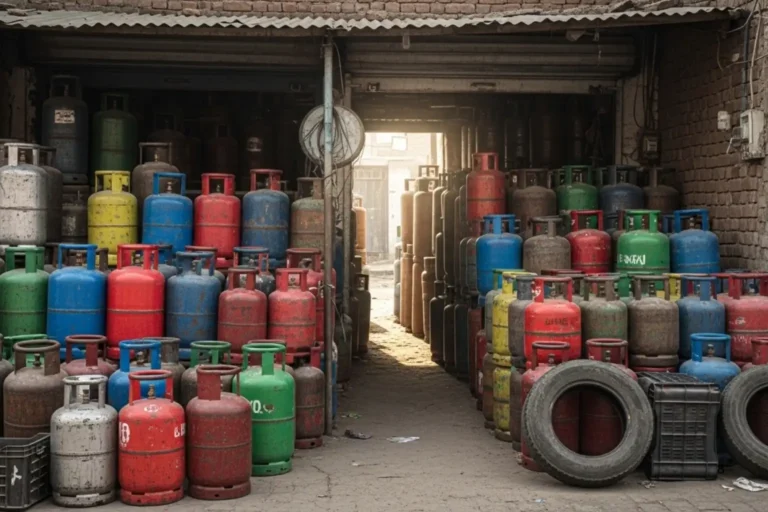
- 🔥 Domestic Fuel Alternatives: Consumers managing utility expenditure can evaluate alternative heating and autogas benchmarks via our LPG Rates Today in Pakistan guide.
Economic Interconnections: How Fuel Prices Impact Other Sectors
Fuel price fluctuations immediately cascade across supply chain logistics and everyday consumer commodities:
Who sets petrol prices in Pakistan?
Petrol prices in Pakistan are calculated by the Oil and Gas Regulatory Authority (OGRA) based on 15-day international Platts Arab Gulf averages and finalized by the Ministry of Finance and Petroleum Division on the 15th and last day of every month.
How much tax and Petroleum Levy is charged on 1 litre of petrol in Pakistan?
While sales tax (GST) on petrol is currently kept at 0%, the federal government collects Rs. 60 to Rs. 70 per litre in fixed Petroleum Development Levy (PDL) plus approximately Rs. 15 to Rs. 18 per litre in customs duty.
Why do petrol prices change twice a month in Pakistan?
Pakistan follows a fortnightly pricing mechanism where domestic fuel rates are adjusted every 15 days to reflect changes in international crude oil cargoes and the PKR-to-USD interbank exchange rate.
Is the petrol price exactly the same in all cities of Pakistan?
Under OGRA’s Inland Freight Equalization Margin (IFEM), base depot prices across major cities (Karachi, Lahore, Islamabad, Multan, Peshawar) remain uniform, though remote hilly stations may have a minor secondary transport margin of Rs. 0.50 to Rs. 1.50 per litre.
Why is High-Speed Diesel (HSD) often more expensive than Super Petrol?
Globally, middle distillates like diesel have higher refining costs and stronger winter/industrial demand than gasoline, and domestic freight equalization margins on diesel also differ.
What is Euro-V fuel in Pakistan?
Euro-V is an ultra-low sulfur fuel specification (limiting sulfur to 10 parts per million) mandatory for Pakistani petrol and diesel imports since 2020 to protect catalytic converters and reduce urban smog.