
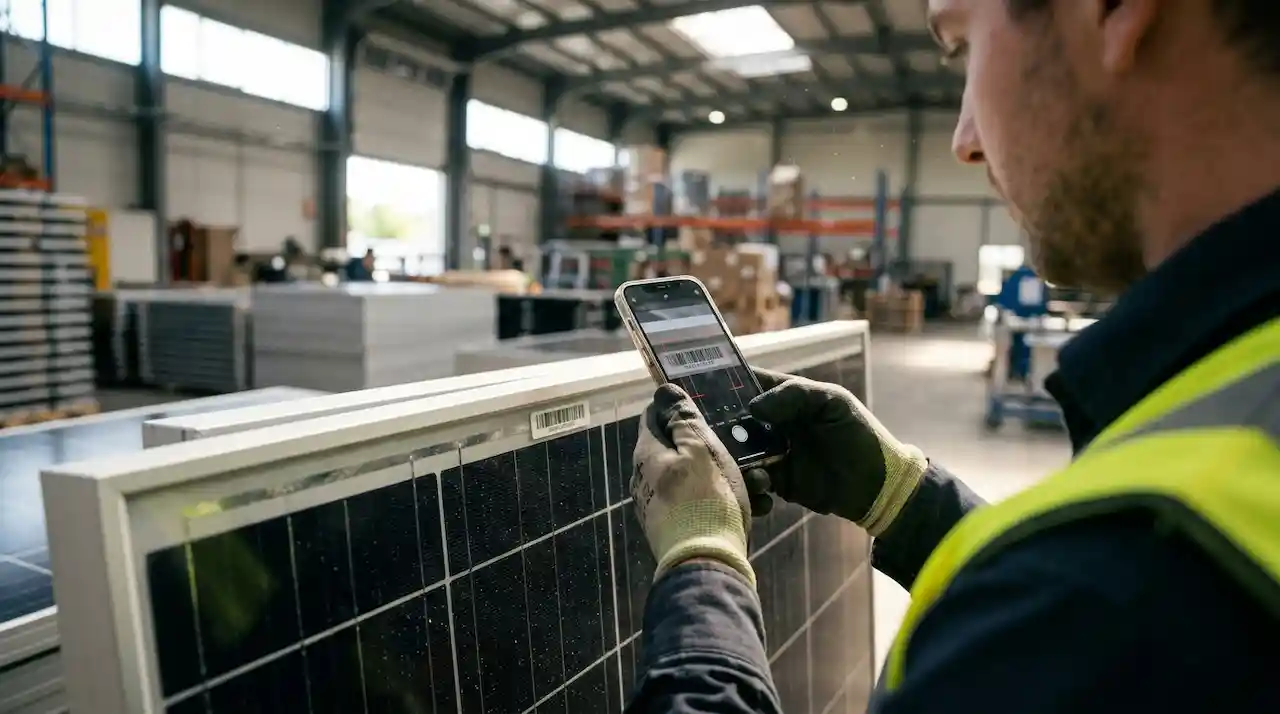
If you have stepped into major electronics hubs like Hall Road in Lahore, Karkhana Bazaar in Faisalabad, or Regal Chowk in Saddar Karachi lately, you know the atmosphere feels like an aggressive stock market floor. Everyone is searching for the latest 585W or 610W solar panel prices. But behind the glossy displays and tempting price cuts lies one of the fastest-growing grey-market consumer traps in the country: the widespread repackaging of B-grade, factory-rejected, and refurbished solar modules sold as brand-new Tier-1 Grade-A plates.
A typical 5kW to 10kW home solar project represents an investment running well over 6 to 12 lakh rupees. If even half of your modules turn out to be substandard or cracked internally, your anticipated generation drops by 30% to 50%, your inverter trips under voltage imbalance, and the promised 25-year warranty evaporates the day you try claiming it. In this detailed, ground-reality guide, we break down exactly how these local scams operate and give you practical, hands-on verification tests to protect your money before you pay a single rupee.
1. How the Scam Works: The Anatomy of a “Local Rebrand”
To spot fake panels, you first need to understand where they come from. Legitimate Tier-1 manufacturers (such as Longi, Jinko, Canadian Solar, and JA Solar) maintain stringent automated optical quality control. When a manufacturing line produces panels with slight busbar deviations, micro-cracks inside silicon wafers, or uneven lamination, these panels are flagged as Grade-B or Grade-C rejects. By international protocol, they are meant for non-critical, off-grid applications or scrap recycling, and their official barcodes are de-listed from manufacturer databases.
Unfortunately, opportunistic importers buy these de-listed lots at massive discounts by the container load. Once unloaded in regional godowns across Lahore, Rawalpindi, and Karachi, an organized finishing process begins:
- Fake Laser Labels & Stickers: High-resolution counterfeit stickers showing famous model numbers (like “Hi-MO X6” or “Tiger Neo N-Type”) are printed locally. Some operations go as far as pasting fake glass corner badges and laser-etched plastic serial ribbons over scraped-off original markings.
- Repackaged Pallets: Modules are stacked onto generic wooden pallets wrapped in branded plastic foil that mimics factory packaging, complete with fake QC pass stamps.
- The “Container Clearance” Narrative: Sellers lure unsuspecting retail buyers with lines like: “Bhai direct container se utra hai, company ka authorized stock clearance hai is liye market se 3 rupay per watt sasta de rahay hain.” If a quoted rate sits significantly below the prevailing national solar wholesale benchmarks, you are almost certainly looking at downgraded stock.
2. Five Hands-On Checks You Must Conduct Before Handing Over Cash
Do not rely on the shopkeeper’s verbal guarantees or paper slips. Perform these five physical inspections directly in the shop or warehouse before loading panels onto your truck:
Check 1: The Embedded Under-Glass Barcode vs. Outer Sticker
Every genuine Tier-1 solar panel has its unique serial barcode permanently laminated beneath the front tempered glass sheet on the top-left or top-right cell row during factory manufacture. It cannot be peeled off without smashing the glass.
- Inspect the embedded barcode under bright sunlight or a strong torch. The numbers must be crisp, laser-printed, and perfectly straight.
- Compare this internal serial number with the outer white specification sticker pasted on the backsheet frame, as well as the manufacturer’s pallet manifest sheet. If the under-glass serial and the backsheet sticker differ by even one digit, walk away immediately.
Check 2: Official Manufacturer App Verification
Major brands now provide free smartphone verification tools:
- For Longi: Use the official Longi Solar App or scan the embedded QR code through their official customer verification portal. A genuine plate will immediately return its exact factory production date, wattage binning, and target export destination.
- For Jinko Solar: Download the Jinko Pro verification tool or verify the barcode on Jinko’s global traceability web portal. If the app displays an error saying “Barcode not recognized” or shows the module was registered to a commercial project in another country three years ago, the unit is counterfeit or recycled.
Check 3: Busbar Alignment & Solder Ribbon Uniformity
Modern Grade-A bifacial panels feature precision multi-busbar (MBB or 16BB) technology. Robotic soldering lines lay these micro-thin silver wires with micrometer precision.
- Stand 2 feet away and scan the solar cells across the entire panel length. Every busbar line should be laser-straight, uniform in color, and completely free of wavy bends.
- Look closely at the spaces between cut cells. If you notice yellowish flux residue, burnt solder dots, or misaligned cell gaps, human hands repaired that panel in an unauthorized workshop.
Check 4: Junction Box & IP68 Silicone Seal Inspection
Flip the panel over and look closely at the black plastic junction box housing the bypass diodes:
- Factory-sealed junction boxes use automated machine-poured black potting resin or high-grade silicone sealant that sits perfectly flat and neat.
- Substandard or repaired plates often have messy, uneven clear silicone smeared by hand around the edges, with visible air bubbles or loose lids.
- Check the DC cables: authentic panels come with thick, clearly branded 4mm² or 6mm² cross-linked cables and certified MC4 connectors marked with polarity (+ / -) stamps. Fakes often use thin, unbranded PVC cables that heat up under high summer amperage.
Check 5: The “Flash Test” Report Requirement
When buying in quantities of 10 or more panels (standard for 5kW to 10kW residential setups preparing for solar net metering in Pakistan), demand the factory Flash Test Report (also called the IV curve report). This computerized sheet lists the exact tested wattage, Voc (Open Circuit Voltage), Isc (Short Circuit Current), and fill factor for every single serial number on that specific wooden pallet. Genuine Tier-1 distributors provide this printout without hesitation; fraudulent dealers will claim “system down hai” or “company se test report nahi aati.”
3. The Hidden Cost of Buying Cheap B-Grade Panels
Many homeowners ask: “Bhai agar 585 watt ki B-grade plate mujhe 4,000 rupay sasti mil rahi hai, to thora output kam bhi de to kya harj hai?”
Here is the economic reality in Pakistani climate conditions:
| Critical Performance Factor | Genuine Grade-A Tier-1 Panel | Counterfeit / B-Grade Substandard Panel |
|---|---|---|
| Summer Thermal Tolerance (45°C+) | Low temperature coefficient (-0.29%/°C). Generates steady output during extreme heat waves. | High degradation rate. Power output plunges by 35% to 45% as ambient heat crosses 40°C. |
| Hotspot & Fire Hazards | High-grade bypass diodes protect against shaded cell hotspots safely. | Micro-cracked cells develop localized resistance, leading to burnt backsheets and potential fire risk. |
| Inverter MPPT Efficiency | Uniform voltage across all panels keeps inverter tracking at peak efficiency. | Mismatched internal resistance causes strings to drop voltage, causing frequent inverter fault codes (E04/E08). |
| True Lifespan Expectancy | 25 to 30 years with less than 0.4% annual power degradation. | Severely degrades within 2 to 4 years, requiring costly complete array replacement. |
4. How to Buy Safely: 3 Golden Rules for Pakistani Consumers
- Buy Strictly from Tier-1 Authorized Importers or Direct Partners: Instead of chasing unregistered roadside shops offering rock-bottom cash quotes, buy directly from established national corporate distributors or their verified regional franchise partners. Check the manufacturer’s regional website to confirm if the vendor is an authorized channel partner.
- Demand an Official Tax Invoice with Individual Serials: Never accept a handwritten raw katchi parchi. Ensure your sales tax invoice explicitly lists every individual serial number alongside a written 10-to-12-year product warranty and 25-year performance guarantee. If a company goes out of business, authorized distributor receipts allow you to file direct international RMA claims with the parent company.
- Keep the Panels in Original Pallet Straps: If you are purchasing full pallet quantities (typically 31 to 36 panels per crate), insist on receiving an unopened factory crate secured with original composite banding and corner protectors. Inspect the pallet before the delivery truck leaves the warehouse.
Practical Checklist Summary
Investing in solar power remains one of the smartest economic moves a Pakistani household can make to defeat crushing utility bills. However, saving a few thousand rupees on unverified panels is a classic false economy that will cost you tens of thousands in lost generation every single summer. Take your smartphone, scan the embedded under-glass barcode, inspect the solder ribbons under daylight, and demand an official serialized invoice. Protecting your hard-earned capital takes only ten minutes of vigilance at the warehouse counter.



One Comment