Which Cement Is Best in Pakistan? OPC vs SRC & Brand Comparison
An engineering benchmark of Pakistan’s top cement brands — evaluating Bestway, Fauji, Lucky, DG Khan, Maple Leaf, and Askari for foundations, columns, and roof slab casting.
- Roof Slab (Chatt): Choose Bestway, Fauji, DG Khan, or Maple Leaf OPC (Grade 53 strength benchmark).
- Foundations & Sem Areas: Use Sulphate Resistant Cement (SRC) if soil has high water table, dampness, or salinity.
- Freshness Mandate: Never use bags older than 90 days from manufacturing date; strength declines by 20% after 3 months.
- Curing (Tarai): Maintain 10 to 14 days continuous water ponding to prevent structural shrinkage micro-cracks.
For standard residential house construction in Pakistan, Ordinary Portland Cement (OPC) is the industry standard. For structural framing like roof slabs (chatt) and columns, Bestway, Fauji, DG Khan, and Maple Leaf lead the market due to exceptional 28-day compressive strength and consistent setting times. If your building site has high moisture (sem) or soil salinity (kallar), structural engineers strongly recommend Sulphate Resistant Cement (SRC) from the foundation base up to the Damp Proof Course (DPC) level.
Selecting the right cement brand is one of the most consequential structural decisions during residential construction in Pakistan. Building contractors and local masons often recommend specific brands based on dealer relationships or delivery convenience rather than testing data.
However, your foundation footings and concrete roof slabs are cast only once in a lifetime. Using the wrong cement category or stale inventory can cause long-term structural distress, including hairline shrinkage cracks across ceilings, dampness creeping through masonry, and internal rebar oxidation.
This technical guide evaluates Pakistan’s leading cement manufacturers, explains the practical differences between OPC and SRC, and provides stage-by-stage recommendations for residential builders.
1. OPC vs. SRC Cement: Understanding the Technical Differences
A vast majority of first-time homebuilders in Pakistan order cement without specifying the grade or type. Ordinary Portland Cement and Sulphate Resistant Cement serve entirely distinct chemical functions:
🏢 Ordinary Portland Cement (OPC)
- Applications: Reinforced concrete (RCC) roof slabs, columns, beams, brick masonry, and internal plastering.
- Characteristics: Rapid strength development, achieving over 90% of structural capacity within 28 days under proper water curing.
- Setting Duration: Initial setting in approximately 45–60 minutes; final setting completed within 6–8 hours.
- Availability: Readily available in standard 50kg bags across hardware retailers nationwide.
🛡️ Sulphate Resistant Cement (SRC)
- Applications: Foundation footings, basement retaining walls, plinth beams, and underground water tanks.
- Characteristics: Low Tricalcium Aluminate (C3A under 5%) protects concrete from expansive salt reactions and spalling.
- Recommended Areas: Strongly advised in high-salinity agricultural lands across Punjab, waterlogged urban sectors, and coastal Sindh.
- Cost Factor: Carries a market premium of approximately Rs. 40 to Rs. 80 per bag over standard OPC.
Engineering Rule of Thumb: Never use standard OPC below ground level if your site soil contains white salt efflorescence (kallar) or high groundwater. Conversely, avoid using SRC for roof slabs, as standard OPC offers faster strength gain and superior early curing for suspended slabs.
2. Top 7 Cement Brands in Pakistan: Engineering Comparison
Pakistan’s cement manufacturing sector is governed by PSQCA standards (PS:232 for OPC and PS:612 for SRC). The table below compares the country’s top 7 brands in a streamlined 3-column mobile-friendly layout:
Note: Other notable quality regional manufacturers include Kohat Cement (KPK/Northern Punjab) and Pioneer Cement (Central Punjab), both of which produce solid PS:232 compliant mixes.
3. Construction Stage-by-Stage Cement Selection
When planning your 5 Marla House Construction Budget, strategically deploying cement across different phases prevents unnecessary spending without compromising safety:
- Foundations & Plinth Beams (Up to DPC): For plots with salt efflorescence or high subsoil water, use Sulphate Resistant Cement (SRC). On dry, stable ground, premium OPC brands like Fauji, DG Khan, or Askari provide dependable bedrock adhesion.
- Roof Slab (RCC Chatt Casting): Slab casting requires rapid early strength and minimal thermal shrinkage. Bestway, DG Khan, Maple Leaf, and Fauji are standard recommendations. Pair them with a 1:2:4 volumetric concrete mix and certified Grade-60 Deformed Steel Rebar.
- Brick Masonry (Deewaron Ki Chunai): Bricklaying does not require ultra-high compressive cement. Mid-tier brands like Lucky, Cherat, or Flying Cement deliver strong mortar bond strength at lower overall cost.
- Plastering (Internal & External): Plaster requires high fineness to prevent surface crazing and honeycomb voids. Maple Leaf and Fauji produce smooth wall finishes with minimal shrinkage cracks.
4. How to Identify Genuine vs. Substandard Cement on Site
Re-packaging low-grade or expired cement into counterfeit branded bags remains a recurring issue in Pakistani retail markets. Conduct these four quick on-site verification tests upon delivery:
- Manufacturing Date Rule (90-Day Limit): Verify the weekly batch code printed on the bag seams. Cement loses approximately 20% of its compressive strength after 3 months due to atmospheric moisture absorption. Never accept bags older than 90 days.
- The Hand Insertion Temperature Test: Thrust your hand deep into an open cement bag. Fresh, unhydrated cement should feel noticeably cool to the touch. If the interior feels warm, partial hydration has already begun.
- Fineness & Lump Inspection: Rub a pinch of dry cement powder between your index finger and thumb. It should feel as silky and smooth as talcum powder. Any gritty texture or hardened pebbles indicates moisture damage or stone dust adulteration.
- Water Glass Float Test: Drop a tablespoon of dry cement onto the surface of a clear glass of clean water. Genuine fine cement will float momentarily before gradually sinking. Substandard mixtures heavy with sand or silt will plunge immediately.
Never allow concrete roof slabs to dry out during the first 48 hours after casting. Maintain continuous water ponding (tarai) for at least 10 to 14 days morning and evening. Inadequate hydration causes up to 30% loss of ultimate compressive capacity and creates surface thermal cracks.
5. Proper Site Storage to Prevent Hardening
Even premium-grade cement hardens quickly if stored incorrectly on-site. Observe these three mandatory storage safeguards:
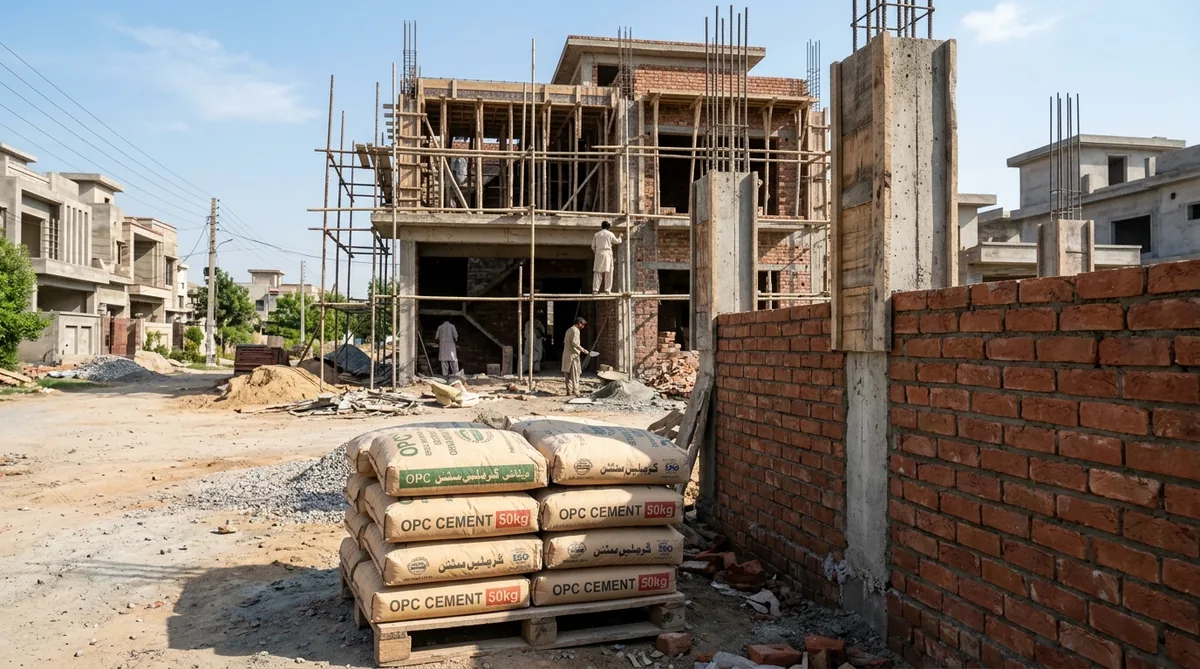
- Elevate on Wooden Pallets: Never stack bags directly on bare earthen or concrete floors. Keep them elevated at least 6 inches on timber pallets.
- Maintain Wall Clearance: Keep stacked rows at least 1.5 to 2 feet away from exterior warehouse or perimeter walls.
- Tarpaulin Weatherproofing: Wrap cement stacks completely in heavy-duty polyethylene waterproof tarpaulins, especially during humid monsoon weather.
Frequently Asked Questions (FAQs)
Which cement brand is best for roof slab (chatt) casting in Pakistan?
For roof slab (RCC) casting, Bestway, Fauji, DG Khan, and Maple Leaf Ordinary Portland Cement (OPC) are considered the premier choices in Pakistan. They consistently meet PSQCA Grade-53 standards, delivering high 28-day compressive strength and optimal setting times that minimize shrinkage cracks.
Fauji Cement vs Bestway Cement vs DG Khan: Which is better?
All three belong to Pakistan’s Tier-1 cement category. Bestway is widely favored for heavy RCC framing and roof slabs due to rapid early hardening. Fauji Cement offers outstanding batch-to-batch consistency and nationwide availability. DG Khan Cement (Nishat Group) is renowned for heavy civil infrastructure, massive kilns, and structural durability across both Northern and Southern zones.
What is the standard weight of a cement bag in Pakistan?
According to the Pakistan Standards and Quality Control Authority (PSQCA), every standard commercial cement bag must weigh exactly 50 Kilograms (50 KG). Always verify the factory stitching and weight when taking delivery at your construction site.
When should you use Sulphate Resistant Cement (SRC) instead of OPC?
While not legally mandated for private residential homes, structural engineers strongly advise using SRC for foundation footings and masonry up to the Damp Proof Course (DPC) level whenever the plot has high groundwater, dampness (sem), or saline soil containing sulphate salts (kallar).
How many days should concrete be cured (watered) after slab casting?
Concrete roof slabs and columns should be cured continuously for at least 10 to 14 days. In hot Pakistani summers, morning and evening water ponding is critical, as premature drying can reduce ultimate concrete strength by up to 30% and trigger micro-cracks.