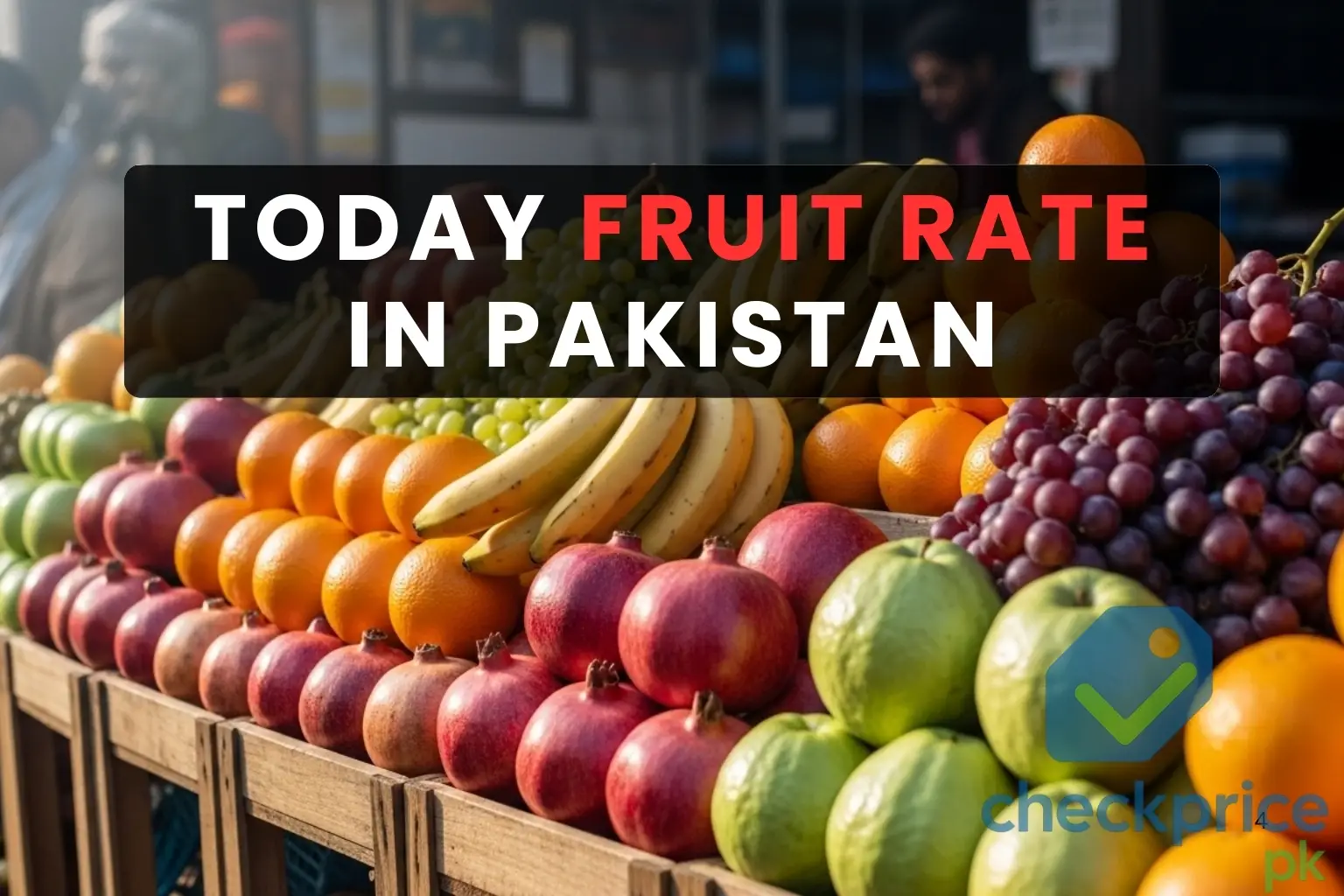
Fresh fruit prices in Pakistan are set every morning through open auctions (boli) at major agricultural wholesale markets—including Badami Bagh and Singhpura Fruit Mandi in Lahore, New Sabzi Mandi (Super Highway) in Karachi, and Sector I-11 Mandi in Islamabad—before Deputy Commissioner (DC) Market Committees issue the official daily retail price list (Nirkhnama). Because perishable fruits depend on orchard harvest cycles, cold-storage electricity tariffs, and Chaman/Taftan border imports, rates shift daily between Grade-1 (Awal) and Grade-2 (Doyam) produce.
Below is today’s officially notified fruit rate list in Pakistan (per kilogram and per dozen), followed by our complete seasonal calendar and wholesale mandi buying guide.
Today’s Fruit Rate List in Pakistan (Official Mandi Rates)
| Max Price (Rs/kg) | Min Price (Rs/kg) | نامِ پھل (Urdu) |
| 40 | 38 | آم کچا |
| 130 | 125 | آم فجری |
| 245 | 235 | آم سندھڑی اول |
| 240 | 230 | آم دوسہری |
| 110 | 105 | آم دیسی |
| 315 | 300 | آم انور رٹول |
| 270 | 258 | آم چونسا |
| 120 | 115 | آم لنگڑا |
| 215 | 205 | چیکو |
| 250 | 233 | سیب سفید اول |
| 115 | 110 | سیب وانا سفید |
| 390 | 362 | سیب کالا کولو پہاڑی |
| 260 | 248 | سیب کالا کولو میدانی |
| 215 | 193 | کیلا درجن اول |
| 140 | 125 | کیلا درجن دوم |
| 430 | 410 | آلو بخارہ |
| 270 | 257 | آڑو سپیشل |
| 190 | 182 | آڑو اول |
| 675 | 645 | لیچی |
| 310 | 295 | انار دیسی نیا |
| 260 | 247 | پپیتا |
| 40 | 37 | تربوز |
| 180 | 172 | جامن دیسی |
| 240 | 230 | خوبانی امری موٹی |
| 320 | 305 | خوبانی سفید |
| 280 | 267 | فالسہ |
| 360 | 341 | کھجور عراقی |
| 470 | 445 | کھجور ایرانی |
| 360 | 340 | کھجور اصیل |
| 140 | 135 | گرما |
| 200 | 191 | ناشپاتی |
| 55 | 52 | گنڈیریاں |
| 475 | 452 | ناریل (فی عدد) |
Note: Rates vary by city due to freight charges. Above prices are Punjab mandi base rates.
Official Source: (Punjab Government)
How Pakistan’s Fruit Mandis Set Daily Rates: From Orchard to Street Cart
Many consumers wonder why a kilogram of Kala Kulu apples or Sindhri mangoes listed at Rs. 240 on the official DC rate list is sold for Rs. 320 by neighborhood fruit carts (rehris) and upscale supermarkets. Understanding the three tiers of Pakistan’s fruit supply chain helps you shop smarter:
- 1. Subah Ki Boli (Morning Crate Auction – 4:30 AM to 7:00 AM): Trucks arriving from Sargodha (kinnow), Multan/Mirpurkhas (mangoes), Quetta/Swat (apples, peaches, cherries), and Tando Allahyar (bananas) unload wooden crates (petis) and cardboard cartons at the central fruit mandi. Commission agents (Arhtis) auction these lots to wholesalers.
- 2. DC Market Committee Grading (Awal vs. Doyam): The government Market Committee calculates a 10% to 15% retail margin over the morning wholesale average and publishes two rates: Darja Awal (A-Grade, uniform size, spotless skin) and Darja Doyam (B-Grade, mixed size). Street vendors frequently buy cheaper B-Grade crates from the mandi but charge customers the A-Grade rate—or claim their stock is “Special Export Quality” outside the DC list.
- 3. Cold Storage (CA Store) vs. Fresh Tree Harvest: From November through April, apples, pomegranates, and dates sold in Pakistani markets come out of Controlled Atmosphere (CA) cold stores. High industrial electricity bills for cold storage add Rs. 40 to Rs. 70 per kg to late-season fruit prices.
Seasonal Availability & Best Buying Calendar for Pakistani Fruits
Buying fruits at the peak of their regional harvest guarantees natural ripening without calcium carbide chemicals and saves 40% to 50% compared to early-season arrivals:
| Fruit Variety | Primary Production Region | Peak Harvest Season | Mandi Price Trend |
|---|---|---|---|
| Kinnow & Musambi (Citrus) | Sargodha, Bhalwal, Toba Tek Singh | December – March | Cheapest in Jan–Feb (sold by dozen/mann) |
| Mangoes (Sindhri, Chaunsa, Anwar Ratol) | Mirpurkhas, Multan, Muzaffargarh, RYK | May – September | Sindhri peaks in June; White Chaunsa in Aug |
| Apples (Kala Kulu, Gaja, Golden) | Ziarat, Kalat, Quetta, Swat, Mansehra | September – February | Fresh mountain harvest arrives Sep–Nov |
| Guava (Amrood – Surahi & Gola) | Sheikhupura, Kasur, Kohat, Larkana | November – March (Winter Crop) | Winter crop is sweet, crisp & pest-free |
| Banana (Chittidar & Basrai) | Thatta, Badin, Khairpur, Nawabshah | Available All Year | Highest prices during Ramadan & Eid |
| Peach (Aaru), Plum & Apricot | Swat Valley, Mingora, Gilgit, Quetta | May – August | Short shelf life; best bought early morning |
| Pomegranate (Qandhari & Bedana) | Qilla Abdullah, Loralai, Kandahar, Iran | September – January | Imported Bedana commands premium rates |
City-Wise Fruit Price Differences Across Pakistan
Lahore (Singhpura & Badami Bagh Mandis)
Lahore serves as the central distribution hub for central Punjab. Citrus from Sargodha, guava from Kasur/Sheikhupura, and mangoes from Multan arrive with minimal transport overhead. However, upscale residential sectors (DHA, Gulberg, Johar Town) routinely see retail fruit shops charging 20% to 30% above the DC Lahore rate list unless you shop at Model Bazaars or buy whole 10 kg crates (petis) directly from Singhpura Mandi.
Karachi (Super Highway New Sabzi Mandi)
Karachi enjoys the lowest prices in Pakistan for Sindhri mangoes, Basrai bananas, chikoo, papaya, and coconut due to immediate proximity to Sindh’s coastal orchards. Imported Iranian dates, Kiwi, and sea-freighted fruits are also Rs. 30 to Rs. 50 per kg cheaper in Karachi than in northern cities, whereas Swat peaches and Kashmiri apples carry higher diesel truck freight.
Islamabad & Rawalpindi (Sector I-11 Mandi)
Positioned at the gateway to Khyber Pakhtunkhwa and Gilgit-Baltistan, the twin cities receive the freshest first-grade supplies of Swat peaches, plums, persimmons (Japani phal), and northern apricots. Retail prices in Islamabad’s sectors (F-6, F-7, F-10, G-9) are typically Rs. 20 to Rs. 40 per kg higher than Rawalpindi’s Raja Bazar due to shop rents.
How to Identify Naturally Ripened Fruits vs. Chemical (Masalah) Ripened Produce
In Pakistan, unripe mangoes, bananas, and papayas are frequently ripened artificially inside closed crates using illegal calcium carbide packets (“masalah” Pudiya), which release acetylene gas containing traces of arsenic:
- Check the Stem (Dandi) of Bananas: Naturally ripened bananas have a dark brown or black stem while the skin turns uniformly yellow with tiny brown sugar spots. Carbide-ripened bananas have a bright lemon-yellow skin, but the top stem remains hard and bright green.
- The Water Float & Smell Test for Mangoes: A mango ripened naturally on the tree or in hay has a sweet aroma at the stem end and sinks in a bucket of water. Carbide-treated mangoes look artificially yellow on the outside, have zero aroma, taste sour near the seed (guthli), and often show black burn patches on the peel within two days.
- Beware of Paraffin Wax on Apples: Imported and cold-storage apples are often coated with heavy petroleum wax to make them shine under shop lights. Scrape the skin lightly with the back of a knife before eating, or wash thoroughly in warm water mixed with baking soda and vinegar.
Related Daily Mandi & Kitchen Price Lists on CheckPrice.pk
- 🍗 Today Chicken Meat Rate in Pakistan – Live 1 Kg dressed and boneless chicken mandi prices.
- 🐓 Broiler Rate Today in Pakistan – City-wise wholesale poultry farm and DC retail rates.
- 🌾 Today Fertilizer Price in Pakistan – Sona Urea, DAP, and Potash rates for orchard growers.