Munji Rate in Pakistan Today (مونجی / دھان کا ریٹ) – Live Mandi Rates
Check live wholesale paddy (dhan / munji) rates across major grain markets including Hafizabad, Gujranwala, Sheikhupura, Sialkot, and Sindh for Super Basmati, Kainat 1121, Basmati 1509, and IRRI-6.
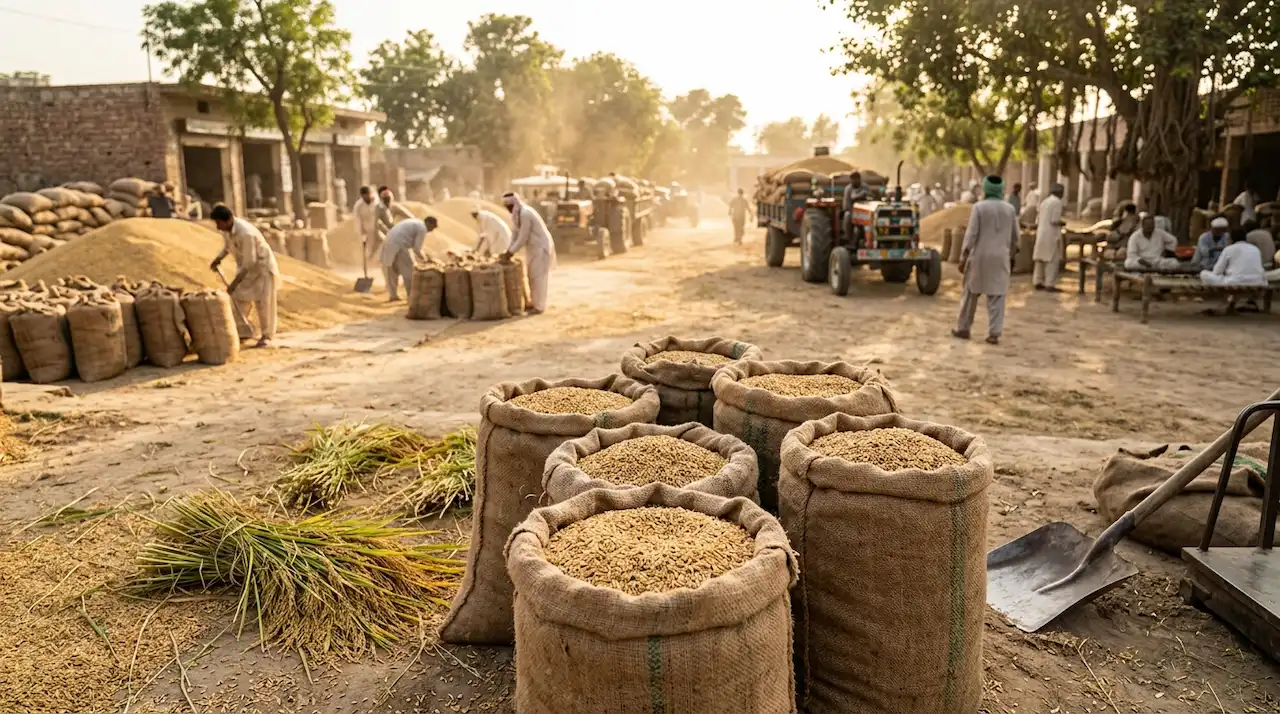
Paddy (locally known as مونجی / Dhan) is Pakistan’s leading cash grain crop and the backbone of national agricultural exports. During the October harvesting peak, wholesale bidding across Punjab and Sindh grain markets (*Galla Mandis*) experiences high trading volatility based on moisture percentage, grain breakage, and international export contracts. Below is the comprehensive wholesale rate list per 40 KG (maund / من) and 100 KG across all commercial varieties and primary rice mandis.
1. Variety-Wise Munji (Paddy) Rate in Pakistan Today (Per 40 KG & 100 KG)
Official wholesale auction ranges determined on the floor of licensed agricultural grain markets:
| Paddy Variety & Moisture Grade | Rate Per 40 KG (Maund) |
|---|---|
| Kainat 1121 (Top Quality Dry)Moisture <14% • Long Grain Aromatic • Export Grade | Rs. 5,400 – 5,850 |
| Kainat 1121 (Standard / Wet Harvest)Moisture 16–20% • Fresh Combine Harvest Arrivals | Rs. 4,900 – 5,300 |
| Super Basmati (Season Top Dry)Moisture <13.5% • Traditional Heritage Aroma • Zero Kaat | Rs. 4,600 – 5,100 |
| Super Basmati (Fresh Arrivals)Moisture 15–18% • Regular Mandi Lot | Rs. 4,200 – 4,550 |
| Basmati 1509 (Super Fine Dry)Early Maturing Aromatic • Extra Long Cooking Length | Rs. 4,400 – 4,900 |
| Basmati 1509 (Wet Combine Cut)Moisture 18–22% • Subject to Mandi Moisture Deduction | Rs. 3,850 – 4,300 |
| Super Gold / Kissan BasmatiHigh Yield Commercial Hybrid • Fast Cooking | Rs. 4,200 – 4,600 |
| PK-386 (Paddy)Semi-Dwarf Non-Basmati Fine Grain • High Domestic Demand | Rs. 3,300 – 3,750 |
| IRRI-9 / KSK-133Medium Grain Export Hybrid • Popular in Middle East | Rs. 3,100 – 3,450 |
| IRRI-6 (Sindh & South Punjab)Coarse Long Grain • High Volume African Export Standard | Rs. 2,650 – 3,100 |
2. City & Mandi-Wise Munji Rates Today (Punjab & Sindh Grain Markets)
Comparative live auction bidding prices in Pakistan’s primary paddy wholesale mandis:
| Mandi Name & District | Average Price (Rs./40 KG) |
|---|---|
| Hafizabad Galla MandiPakistan’s Largest Rice Trading Center • Super & 1509 Hub | Rs. 4,450 – 5,750 |
| Gujranwala Mandi (Kamoke / Ghakkhar)Central Export Processing Mills • Kainat 1121 Benchmark | Rs. 4,500 – 5,850 |
| Sheikhupura Mandi (Muridke / Ferozewala)High Volume Basmati & Parboiled (Sela) Mill Bidding | Rs. 4,400 – 5,700 |
| Sialkot & Daska MandiKalar Belt Premium Aromatic Super Basmati Zone | Rs. 4,600 – 5,800 |
| Nankana Sahib & Warburton MandiActive 1509 & Super Basmati Commercial Arrivals | Rs. 4,350 – 5,650 |
| Kasur & Chunian MandiHeavy Daily Combine Harvester Arrivals | Rs. 4,300 – 5,600 |
| Okara, Pakpattan & Depalpur MandiHigh Moisture 1509 Lots & Kainat Direct Bids | Rs. 4,250 – 5,550 |
| Bahawalnagar & Chishtian MandiMixed Basmati, 1509 and PK-386 Arrivals | Rs. 3,350 – 5,500 |
| Larkana Galla Mandi (Sindh)Sindh Rice Capital • Peak IRRI-6 & Supri Arrivals | Rs. 2,650 – 3,100 |
| Badin & Golarchi Mandi (Sindh)Early Coarse Rice Harvest & Parboiled Export Lots | Rs. 2,700 – 3,150 |
3. Moisture (نمی / Kaat) Deduction Formula in Rice Mandis
How moisture content measured via digital moisture meters impacts the final cash payment to growers:
| Moisture Level (%) | Standard Mandi Cut (Kaat) |
|---|---|
| 12.0% – 14.0% (Standard Dry)Safe for long storage & instant milling | Zero Deduction (Full Rate) |
| 14.1% – 16.0% (Mild Moisture)Requires 1 day solar drying on mill floor | Rs. 80 – 150 / 40 KG |
| 16.1% – 18.5% (Moderate Moisture)Standard combine harvested crop in October | Rs. 180 – 300 / 40 KG |
| 18.6% – 22.0% (High Moisture)Heavy drying loss & risk of grain discoloration | Rs. 320 – 500 / 40 KG |
| Above 22.0% (Wet / Immature)Severe breakage risk during de-husking | Refused or Rs. 600+ Cut |
Key Factors That Influence Paddy (Dhan) Rates in Pakistan
Unlike wheat where the government announces an official procurement minimum support price, paddy in Pakistan is traded in a completely free open market. The daily bidding price is determined by the following market forces:
- International Rice Export Demand: Pakistan exports over $3 billion worth of rice annually. High demand from the UAE, Saudi Arabia, European Union, and China drives intense competition among exporters in Kamoke and Muridke, bidding up local farmgate rates.
- Harvest Quality & Head Rice Recovery: Rice millers calculate the “Head Rice Recovery” (HRR)—the percentage of whole, unbroken grains produced after milling. Lots with less than 5% broken grain (Totta) command a Rs. 200–300 premium over broken-prone lots.
- Foreign Matter & Immature Grains: Paddy harvested too early contains green, chalky, or unfilled grains (Chitta / Kacha dana), which reduces oil yield and milling quality. Cleaned and properly ripened lots always receive top bids.
- Diesel & Transport Logistics: Fuel prices directly affect trucking transport costs from interior Punjab and Sindh fields to central terminal markets in Hafizabad and Karachi ports.
Should Farmers Sell Wet Crop Directly or Dry It First?
One of the most frequent dilemmas faced by paddy growers during October is whether to load directly from combine harvesters onto tractor trolleys or arrange temporary sun-drying:
Pros: Immediate cash payment, zero extra labor costs, saves space, and protects against unexpected rain storms.
Cons: Heavy moisture deductions (Rs. 250–500 per maund), lower buyer interest, and weaker bargaining leverage at the auction floor.
Pros: Maximum market rate, zero moisture penalty, competitive bids from top millers, and ability to store crop in gunny bags for price spikes.
Cons: Requires open concrete yard (*Pharr*), manual turning labor, bird protection, and 2 to 3 days of delay.
Understanding Mandi Expenses: Commission, Tolai & Bagging
When settling accounts with your commission agent (Aarhti), ensure all deductions comply with Punjab Agriculture Market Committee regulations:
- Aarhat (Commission): Official commission is 1.5% to 2.0% of gross invoice value. Any charges exceeding 2.5% are unauthorized.
- Tolai (Weighing Fee): Computerized platform weighbridges charge approximately Rs. 15 to Rs. 25 per 40 KG bag for certified weight receipts.
- Palladari / Labor: Unloading and stacking charges by market laborers typically range between Rs. 10 and Rs. 20 per bag.
- Gunny Bag (Bori / Bardana): Standard jute or polypropylene 50 KG bags cost Rs. 120 to Rs. 160 per bag if provided by the mandi agent.
Explore Other Essential Agricultural & Commodity Rates in Pakistan
Stay informed about current farm input costs and seasonal harvest rates across Pakistan:
- Wheat Price in Pakistan Today (گندم کا ریٹ): Track official Punjab mandi wheat and flour mill prices.
- Fertilizer Price in Pakistan (کھاد ریٹ): Live dealer rates for Urea, DAP, SOP Potash, and NPK fertilizers.
- Toori Price in Pakistan Today (گندم بھوسہ): Current livestock feed and wheat straw trolley rates.
- Canvas Pipe Price in Pakistan: Heavy-duty irrigation water delivery pipe rolls for paddy fields.
- Submersible Pump Price in Pakistan: Agricultural tube well bore pump prices for rice field flooding.
Frequently Asked Questions About Munji (Paddy) Rate
What is the current rate of 1509 munji in Pakistan today?
As of today, top-grade dry Basmati 1509 paddy sells between Rs. 4,400 and Rs. 4,900 per 40 KG in central Punjab grain markets like Hafizabad and Gujranwala. Fresh combine-harvested lots with high moisture sell between Rs. 3,850 and Rs. 4,300 per 40 KG.
What is the price of Kainat 1121 paddy in Punjab mandis?
Kainat 1121 is currently trading at the highest premium among all commercial varieties, commanding Rs. 5,400 to Rs. 5,850 per 40 KG for dry export-ready lots with moisture below 14%.
Which mandi is considered the biggest paddy trading center in Pakistan?
Hafizabad Galla Mandi is widely recognized as the largest and most influential rice trading market in Pakistan, often setting the benchmark daily price for Super Basmati and 1509 across the country.
What is the moisture percentage limit accepted in rice mills without deduction?
The standard accepted moisture level in Pakistan’s rice mills is 12% to 14%. Any lot with moisture above 14% is subjected to a moisture penalty (Kaat) ranging from Rs. 80 to Rs. 450 per maund.
What is the difference between Basmati 1509 and Super Basmati paddy?
Basmati 1509 is an early-maturing variety (harvested in late September and October) with exceptionally long cooked grain length, while traditional Super Basmati matures later (late October to November) and features stronger authentic aroma and higher export value in Europe.
What is the price of IRRI-6 paddy in Sindh and Punjab?
Coarse IRRI-6 paddy is currently trading between Rs. 2,650 and Rs. 3,100 per 40 KG in Larkana, Badin, and southern Punjab mandis, primarily driven by parboiled rice export demand to Africa.